October 4th, 2010 — business, design, economics, software
Today Twitter CEO Evan Williams announced he would be stepping down as Twitter’s CEO. Dick Costolo, presently the firm’s COO, will take over that role.
As is its custom, Twitter (the site) exploded with the news, as geeks everywhere speculated, double rainbow-like, What does it mean?
The answer is that they’re simply tending to their business. The myth that founders somehow have mythical vision and deserve important sounding titles like CEO is really mostly garbage. Founders are mostly like everyone else, except for one important difference.
Founders try things. They seek new markets and ideas where others don’t. But they seldom have all the answers. Sometimes they are even visionary, but that doesn’t always make a good CEO from a day-to-day build-the-business standpoint.
Fact: Twitter was not Evan Williams’ idea. It was Jack Dorsey’s idea. And in fact Jack was CEO of the company from 2007 til late 2008 when Williams, a co-founder and early funder of Obvious Corp, took over. (Jack, a great guy and a big dreamer, went on to found Square.)
Fact: No one at Twitter had any idea where it might go when it was created. Seriously – neither Dorsey nor Williams predicted this outcome. I’ve talked to them both about it and the fact is they were just regular guys who tried something new. They had enough resources and drive to make sure it could grow, but they really had no idea where it might lead.
The whole idea that folks like Evan Williams, Jack Dorsey, Biz Stone, Mark Zuckerberg, or Kevin Rose are well-suited to actually run the businesses they have created is pretty much a myth. But yet it’s one people seem to like to believe.
Founders have a very different personality from the sort of person required to build, operate, and grow a business financially. The sooner we can all get over the celebrity CEO complex, the better off we’ll all be.
People need to understand exactly what it takes to found a startup, and Eric Ries has gone so far to say that entrepreneurs actively lie to promote the visionary founder myth – and I agree with him.
Costolo is a genius at building a new-media business like Twitter. Williams is a persistent guy who’s willing to break new ground.
Two. Different. People.
July 31st, 2010 — baltimore, business, design, economics, geography, philosophy, politics, software, trends
I live in Baltimore, in the great state of Maryland. I’ve been studying the economic development process here for many years. While this post contains observations specific to Maryland and Baltimore, the concepts likely apply in other geographies as well. I am curious to hear your perspectives from where you live.
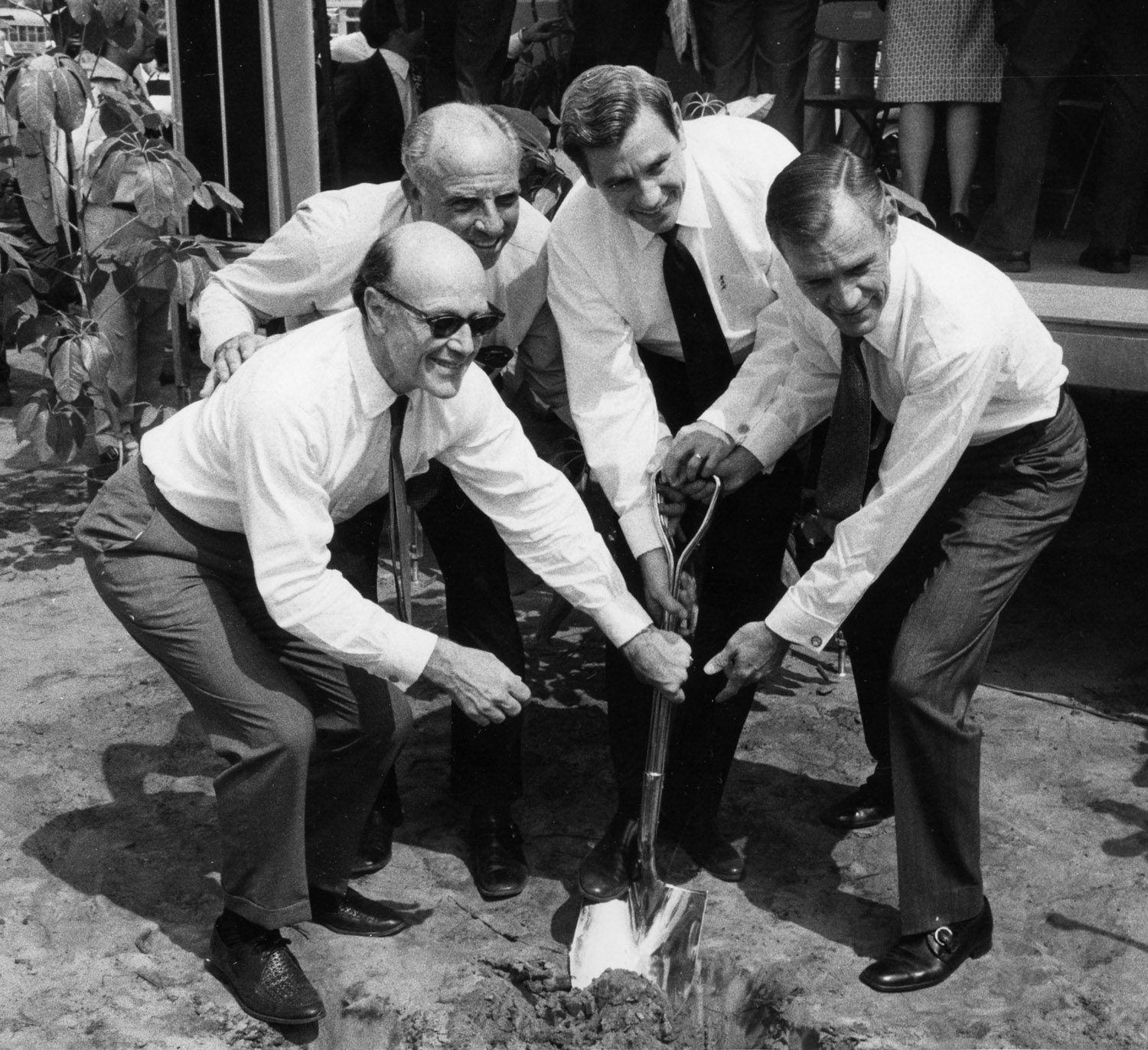 Shh… they don’t know they’re obsolete!
There’s a growing disconnect in economic development. Government sponsored economic development outfits are tasked with 1) growing the tax base, 2) attracting new businesses, 3) helping existing businesses grow, 4) aid in the creation of new businesses, 5) develop and grow the local workforce.
In Maryland, the State Department of Business and Economic Development traces its roots back to the Bureau of Statistics and Information, which was formed in 1884 to compile statistics about agriculture and industry. As industry shifted dramatically in the 1950’s and 1960’s, the focus shifted to providing small business loans and seeding the development of new jobs.
Vast consolidation in manufacturing starting in the 1970’s meant that states were particularly anxious about job losses. The loss of a single plant could deal a staggering blow to the tax base, and could mean a huge loss of jobs — often leading to a demoralized workforce and a downward spiral of negative economic growth. (Think Detroit.)
The Zero-Sum Game
As a result of this process, states began to engage in heated battles to attract and retain manufacturing facilities. The primary tool available to economic development authorities has traditionally been tax credits and other “incentives,” which might include deferred taxes, regulatory considerations, and a “turnkey” permitting process.
As states rushed to use these tools to attract and develop these “big projects,” a kind of zero-sum game emerged between states trying to attract companies and capital. Large corporations were now in a position to effectively “shop” for the sweetest incentives. As you likely know, states have not shown much restraint in their willingness to offer breaks. In fact, it’s all been very embarrassing — a rush to the bottom, where states compete not on their own merits, but on how many baubles they can afford to dole out to their latest suitors.
This disease has so stricken governments, Governors, and their economic development teams that they’ve developed an unhealthy obsession with “big projects” as well. Folks in government, who on average have very little first-hand experience with entrepreneurship or business, tend to think in “causal” terms. If we do X, then Y will happen. And so the logic is that if you want a big result, take a big action.
And so they chase after smokestacks and big iron, trying to attract heavy manufacturing, big developments by big developers, corporate headquarters, sports teams, stadiums, and slot parlors. But here’s the paradox: these projects, while flashy, just don’t pay off. Tax subsidies are never recouped, and the jobs that are created tend to be bottom-of-the-barrel service industry jobs that barely support a living wage.
Baltimore’s subsidized Camden Yards stadium produces $3 Million per year in tax revenue, but costs Maryland taxpayers $14 Million per year in subsidies. The heavily subsidized Ravens stadium produces $1.4 Million per year but costs taxpayers $18 Million. Failure to impose or enforce job quality standards as part of subsidy packages provided to multiple hotel developments in Baltimore has led to many low-wage jobs and nearly none of the higher paying jobs that were promised. (These conclusions were taken from this report by the group Good Jobs First.)
New Approaches
Maryland, in an effort to develop a strategic focus on biotechnology, instituted a $6M program of tax credits (later increased to $8M) for investors in biotechnology companies. The program has proved wildly popular, and to Maryland’s credit, it recognized the importance of investing in an industry that had already taken root here and, thanks to the presence of the National Institutes of Health and Food and Drug Administration, was a natural strategic focus for our area.
The only question is how effective the biotech tax credit is at actually developing these kinds of jobs in the long term. It’s a little early to judge how effective the biotech tax credit program will be, but we can make these qualitative observations about that industry:
- Developing a new biotech product (whether a drug, device, or process) has a very long lead time.
- Because of long lead times and the need for highly-skilled workers, development is very expensive.
- Failure is common and is often stark: big bets on molecules that don’t pass approval processes or are copied by competitors can lead to epic financial losses.
- The kicker: successful companies are often acquired by firms based elsewhere, leading to job losses or relocations, ultimately undoing the benefit originally intended.
I do not want to overemphasize the potential downsides; there are many tangible benefits of this program both now and in the long term. The only question is whether we can do better.
Betting On Ourselves
What if, instead of trying to offer subsidies to outsiders, we start investing in ourselves? A tax credit for biotech is a step in that direction, but what could we do with a comparable program for Internet and IT startups? What if we made investment capital available to Maryland businesses as part of a strategy to develop new companies that actually stay here for the long term (and are not susceptible to subsidy bribes from other locales)?
A new program called Invest Maryland has been proposed by Governor Martin O’Malley, and is based on similar programs instituted in other states. The program would make $100 Million in venture capital available to Maryland businesses. Funds would come from tax prepayments made by insurance companies in exchange for tax credits. The theory is that the cost of the tax credits would be exceeded by the benefit in business development provided by the venture investments.
Done properly, this is probably a very sound program. But to be maximally successful, I believe we need to start placing strong bets on information technology startups in particular:
- IT startups are very capital efficient. Thanks to lean startup methodologies, IT startups can get up and running for as little as $50,000 to $150,000 in investment.
- Maryland already has the highest concentration of information technology workers in the world. It’s a strong strategic fit for exactly the same reasons that biotech investment is a good fit.
- To achieve strong returns with early stage investments, it’s often necessary to invest in 150 or more companies. The small capital requirements of IT companies allow for many more investments to be made with less capital, thus increasing the odds of success.
- A large portfolio of seed-stage IT investments can yield internal rates of return of up to 25-30% annually, which is terrifically high. That is in addition to the benefit of building a permanent base of IT businesses in Maryland, and all the job and tax-base benefits that would bring.
- A large number of ventures would, statistically, also have to produce a large number of failures. This culture of continuous endeavor would de-stigmatize failure and allow for repeated teaming and relationship building. Inenvitable losses are not losses, but in fact fertilize the forest floor — building the ecosystem for the long term.
- A culture rich in startups will keep us from exporting our best and brightest to other places, which we do routinely right now.
$10M for IT Startups
As Maryland’s leaders and legislators consider the Invest Maryland initiative, I propose that the state set aside $10M of its $100M fund specifically for IT startups. With that $10M, I propose that Maryland invest in up to 200 seed stage IT firms at anywhere from $50K to $150K per company.
Doing this well will be difficult. However, by partnering with existing entities such as Baltimore Angels and members of the business community, we can make that investment maximally productive. We’d need to figure out the details, but we can’t expect government employees to make these investments on their own without domain expertise. By leveraging the people in the community that want to see these investments occur and who do have appropriate domain expertise, we can dramatically increase the effectiveness of this fund.
And if the initial $10M investment proves effective, we should consider enlarging the program to $25M or higher later. This strategy carries very little risk for the state and would create a stunning worldwide buzz about the vibrancy of the startup culture in Maryland, and would highlight the innovative private-public partnership that sparked it.
Thinking Small
The businesses we routinely cite as our biggest successes — Under Armour, Advertising.com, SafeNet, Sourcefire, Bill Me Later, to name a few — all came about as home-grown successes. They are not here because we brought them here from someplace else. They’re here because they were grown here from scratch, by people who love it here.
If we start now, placing a large number of bets on our brilliant citizenry, we will do something remarkable: we’ll launch a virtuous cycle of entrepreneurship — the opposite of the kind of downward spiral associated with the rust belt era.
Instead of the simplistic “causal logic” associated with “big” economic development, we’ll be using the logic of entrepreneurial “effectuation,” of the kind promoted by entrepreneurship researcher Dr. Saras Sarasvathy.
It is the combined effects of many people pursuing entrepreneurship that will lead us someplace extraordinary. Suddenly, Baltimore (and Maryland) will become the cover story on the airline magazine — the “hot” place to be. One (or ten) corporate headquarters relocations will never do that, because it won’t bring about endemic entrepreneurship in the culture.
Making lots of small bets instead of fewer “big” bets makes government nervous. Everyone wants to be seen as someone who accomplishes something big, and with short gubernatorial terms, it’s tough to get ramped up with plans that might take 10 or 12 years to realize. But that’s exactly what’s needed.
We need to resist the temptation to focus solely on big development, and instead bet on the tiny startups. The big wins will come when these firms flower, and the ecosystem that gave them life comes into its own. Yes, that might happen on someone else’s watch — but it’s still the right thing to do.
A recent report from the Kauffman Foundation proclaims, “Job Growth in U.S. Driven Entirely by Startups.” If this is the case, Lord knows we could use a lot more startups. If we want new jobs — and not jobs poached from other states at great expense and flight risk — the only logical choice is to focus on creating new startups.
And if solid returns of 25-30% can be realized on a large portfolio of startups, shouldn’t we drop almost everything else and focus only on that?
The first state that adopts this strategy will be sowing the seeds of an incredible, dynamic culture of entrepreneurship. Is Maryland ready to take the challenge?
July 28th, 2010 — business, design, economics, philosophy, software, trends
Some interpreted my last post (about finding technical co-founders) as advice to “do nothing” — to wait until the stars align to start working on an idea. And in a way, that is what I’m suggesting. But that observation is really part of a larger picture of how a fully functioning entrepreneurial ecosystem works. In such a system, both ideas and businesses are born from personal relationships. However, outside of a few niche industries in a few niche geographies, these ecosystems do not (yet) exist. What then?
Start With What You Have
You may know I am a big fan of Dr. Saras Sarasvathy, the entrepreneurship researcher (now at University of Virginia’s Darden School of Business). Her clear-eyed analysis of the entrepreneurial process suggests that entrepreneurship is a behavior and a process. She believes that entrepreneurs are made, not born. And I absolutely agree with her.
The last thing she would suggest that an entrepreneur do is “wait” before taking action. Instead, she suggests that all entrepreneurship is a series of successive “small bets” — specific kinds of bets, with “affordable” downsides and higher, or possibly even uncapped upsides. By participating in this process, the entrepreneur actually changes the world around them and influences the success of their later activity. In short, they begin to mitigate the risks of their own bets, enhancing the upside and lowering the downside of the entire entrepreneurial process.
And this is exactly how entrepreneurship works. In this model, you never “wait around” — you start right away, taking successive small risks, and then going from there.
Doing It Right (and Wrong is OK too)
Matt Mireles wrote in on the last post to express his objection that he felt that I was suggesting that folks “never even try to get off the ground.” And I realized that wasn’t my intent at all.
Matt wrote (among many other thoughtful comments):
At least in the stall spin you have altitude to lose! Your advice seems to be “don’t even try to get off the ground.” This bothers me.
Who cares if you throw the prototype out? Who cares if you switch from PHP to Rails? That’s all sunk costs. The only thing that matters is that you make progress, build the team and get customers.
…
Case in point: SpeakerText. My original co-founder built the site in PHP and the app in Flash. The product kind of sucked, but there were some cool features, it got the idea across and we used it to get some good press. He ultimately wasn’t ready to commit and we did the whole stall spin thing you describe (although we parted ways amicably and he still helps out from time to time). Burned through some cash, our angel round imploded, etc.
Matt’s experience, of working with mercenary developers, getting it wrong, losing some cash and probably also causing a certain amount of misery in the process, is not uncommon. And it’s perfectly awesome. It’s exactly what entrepreneurs should be doing, which is failing early and failing often! Think of the lessons that he’s now learned!
Does this contradict my other advice? Not at all. Because Matt did one key thing that victims of the “stall spin” never do, which is to control their downside risks. Matt lived to tell the tale. In flying terms, he gave himself enough altitude to live through the stall spin and recover; his willingness to learn from mistakes and his awareness of what he didn’t know made it possible for him to live, where most people die.
And that’s really what the last post is all about: how to avoid making fatal mistakes by aligning common interests, which is (in effect) a way of capping downsides.
I promised a follow-up post about finding technical cofounders, which will further explore what a functioning ecosystem looks like. But here’s a preview to ponder: in functional startup ecosystems, you see more alignment of interests, risk taking with capped downsides, and strong pre-existing relationships (by way of meshed social networks). Can’t wait to share those ideas with you.
In the meantime, take Dr. Sarasvathy’s advice and start now. Just control your downside risks, learn from failure, and know what you don’t know! And meet lots of people who can help you along the way. You’ll do great things!
June 5th, 2010 — business, design, economics, geography, philosophy, software, travel, trends

Pride, Passion, Talent on Display at Startup Weekend Seoul
I believe that Silicon Valley may soon be going the way of the floppy disk.
For the last two weeks I have been traveling around Asia with a group of tech entrepreneurs, on a trip called “Geeks on a Plane” organized by Silicon Valley investor Dave McClure. I took the same trip last year.
Why take a trip like this? The answer gets at some very real and seismic shifts taking place in the startup world that will be big news over the next few years.
Startups Cost Less
Ten years ago a successful Internet startup might require one to five million dollars in outside funding. Data centers, engineers, and software licenses were hot commodities and could easily drain a startup’s resources.
Now it is possible to get a startup to the point of testing it in the market — with real customers — for $25,000 to $50,000. This effectively removes VC’s from the equation at these early rounds and turns things over to angel investors. As angel investing becomes increasingly professionalized, success rates increase and more people become involved with it.
“Silicon Valley is a State of Mind, Not Necessarily a Real Place”
Pay attention to this one! This is a quote by Dave McClure and it captures what is happening perfectly. Everywhere you go, there are techies and entrepreneurs who follow the tech business scene, and they are all ideological peers.
Silicon Valley is all about embracing the idea that the world can be changed for the better, and that one can (ultimately) realize rewards by changing it. If you believe this, you are a part of Silicon Valley. What about that statement is related to place?
In Shanghai, Beijing, Seoul, Singapore and Tokyo I have seen first hand the buzz and excitement that comes from people who believe that they can engage with the problems of our world imaginatively and productively. And they are not moving to Silicon Valley.

3D Printer at Singapore’s hackerspace.sg
Place as a Strategic Differentiator
Not being in Silicon Valley is very helpful if you are trying to tap into developing markets like those in China, Korea, and Japan. It is also helpful if you don’t want to have to pay Valley salaries and sucked into the echo chamber there.
As an example, a skilled developer in Silicon Valley might cost you upwards of $120,000 per year; the same person in India would cost $12,000 per year and in Singapore they would cost $48,000 per year.
If you are trying to build a product to serve the Asian market, wouldn’t you rather base your company in Singapore?
Being in “a” place is more important than being in “the” place
It is widely assumed that internet technologies like Skype and email crush distance and make global distributed business possible. True, but there are exceptions.
Real creativity, trust, and ideation has to happen face to face. This is where the magic occurs. If you don’t spend time with people you can’t create.
New-technology tools can help with execution, but only after the team dynamics are in place; they are great for keeping people connected and plugged in, but suck at creating an initial connection.
Love your place. Find the other like minded souls who love your place and start companies with those people. The creativity you unleash in your own backyard is the most important competitive differentiator you have. No one else has your unique set of talents and point of view. Leverage it.
Every City is Becoming Self Aware — All at Once
I do not know of a city anywhere in the world that is not presently undergoing a tech community renaissance right now. This is a VERY big deal.
Every city in the United States along with Europe, Asia, and South America is now using the same playbook — implementing coworking, hacker spaces, incubators, angel investment groups, bar camps, meetups and other proven strategies that will have the effect of cutting off the oxygen supply to Silicon Valley.
Let me say it again: Silicon Valley is getting its global AIR SUPPLY cut.
For the last few decades, Silicon Valley has traded on the fact that people are willing to move there to start companies. The MAJORITY of valley companies are founded by foreign born entrepreneurs. What if they stop coming? What if they find the intellectual and investment capital that allows them to self-actualize in their home turf, where they already have a competitive advantage?
The fact that we have made it so hard for new immigrants to come to the valley and create startups just makes things that much worse. That is why the Startup Visa concept is so important if America – not to mention the valley – wants to keep excelling in innovation and the economy of ideas.

“Soul-crushing Suburban Sprawl” – Paul Graham
The Valley Kinda Sucks
Everybody says that the big draw to San Francisco is the weather. True, it can be pretty nice at times. But it can also be pretty miserable.
The reality is that the weather makes no f*cking difference if you are slaving away 26 hours per day on your startup; and the fact is that humans only really perceive changes in weather anyway: you’ll notice a nice day if it has been preceded by 10 rainy ones, or vice versa. Studies have demonstrated this. Look it up.
Paul Graham said it best, “Silicon Valley is soul-crushing suburban sprawl.” And he also suggested that places that can implement a bikeable, time efficient startup environment without sprawl have a significant competitive advantage over the valley.
Nearly every major city is becoming that place for its community of entrepreneurs. All at once.
So Why Travel?
It’s simple: to go to where the startups will be coming from. Investors who wait around for startups to show up in the valley are going to miss out on serious innovations and investment opportunities.
This means leaving the Lamborghini parked on Sand Hill Road and cabbing it to a gritty hackerspace in the Arab section of Singapore to meet the innovators who are building the future. And this is something that most investors think they are too good and too important to go do.
Fortunately there are scrappy, forward-thinking folks like McClure who are willing to go out there and embrace the future and begin the creative destruction the next wave of innovation will bring to valley culture.
Our challenges are too great to demand that innovation happen one way, in one place, with one set of people. Innovation needs to be systematized and distributed, and this is the opening act.
The Future of Entrepreneurship
I had a great conversation with Dr. Meng Weng Wong today, founder of Joyful Frog Incubator in Singapore. We pondered questions:
- In the future, will companies form teams and then try to get funding, or will entrepreneurs just gather, form ideas and try things?
- How do bands form? And are incubated startups just boy bands?
- Are we not always just betting on individual ability to execute?
- Doesn’t team (and execution) always trump idea?
- Is entrepreneurship a cycle? Shouldn’t exited entrepreneurs come hang out with first time entrepreneurs and try ideas together?
These are important questions in their own right, but the most important thing is that we are asking them. And so are people around the world. And it has nothing to do with Silicon Valley, the place.
Want in on the ground floor of this next wave of innovation? Understand the change that is coming and leverage it in your own backyard. Get involved.
Because I guarantee that in five years the Valley will be a very different place and that we will see thriving startup communities bearing real fruit in every major city.
Why go to the Valley? Good question.
A couple of acknowledgements: Shervin Pishevar pointed out that he and Dave McClure have been talking up the “Silicon Valley is a state of mind” concept for some time; he deserves proper attribution. Hats off, Shervin — the idea certainly resonates with me and I applaud both you and Dave for recognizing and acting on its power.
Also, Bob Albert — an entrepreneur I met in Singapore — came up with the “Is Silicon Valley Dead?” meme while we were chatting, and he deserves credit for crystallizing that idea. It’s been said before, but for different reasons; the forces driving this set of changes are distinctly different and I think we’ll be seeing this notion repeatedly over the next few years.
Dave McClure tweeted this article with the title “The Future of Silicon Valley Isn’t in Silicon Valley,” which is perhaps an even better title, even if it’s a touch less meme-friendly.
Thanks to everyone for engaging in this conversation!